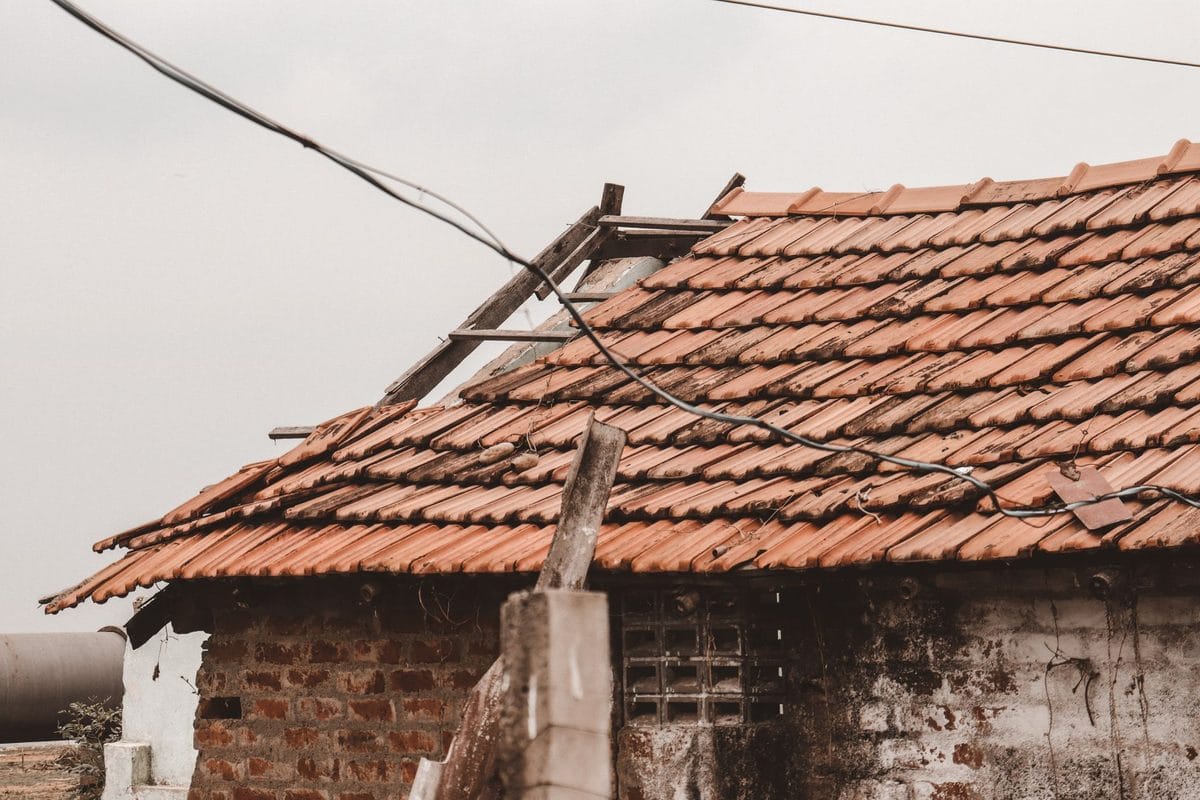
In late October, Storm Austen brought gusts of up to 80mph to parts of Cornwall, Devon and Plymouth, under amber wind warnings from the Met Office. Trade press framed it as the UK storm season reaching its peak. Often the first sign is a sound from the bedroom: a slate sliding off the roof, or a fence panel cartwheeling into next door's garden. Whether the repair bill lands with you or with the insurer depends far more on the wording of the policy than on the wind speed.
Storm damage accounts for a real share of home insurance claims. Aviva's own claims data shows that one in five of its home insurance claims relate to storms, and 84% of those fall between October and March. December, January and February are the peak months, so the heaviest part of the season is still to come. That makes this the right time to check your cover, not the week after the first gale.
What a standard policy is built to pay for
Most standard home policies cover sudden storm damage, such as a tile lifted in a gale or a window broken by a falling branch. They exclude wear and tear, gradual deterioration and rot, and that exclusion is where storm claims are most often argued. A roof that was already slipping before the wind arrived is a maintenance question rather than a storm question, and the insurer will look at its condition before the gale as well as after it. Aviva says the most common causes of its storm claims are broken or loose roof tiles, fallen trees and damaged windows, all of which deferred maintenance can make worse.
Read the exclusions section before you need it, not on the morning a claim is refused. Look for the words wear and tear, gradual deterioration and rot, and check how the policy defines storm or weather damage. If the wording is vague, ask the insurer in writing how it applies storm cover to a roof in poor condition. A written answer is far more useful than a verbal reassurance on the phone, and it is the document you will want if the question comes back in February. Standard cover is a sensible baseline, but a policy that names your roof, your trees and your boundary is the one that pays out when it matters.
Fences, gates and hedges are often left out
Nobody reads the boundary clause until the fence is on the neighbour's lawn.
Fences, hedges and gates are among the things high winds damage most often, and many policies leave them outside the scope of cover. Insurance Business notes that this detail tends to surface only at the point of claim. It matters because a damaged fence can also be a boundary dispute, which adds a second conversation to the repair. Check whether the policy mentions boundary walls, fences, gates or hedges by name, or whether it covers only the building and its outbuildings. If it does not, the cost of a replacement panel after a gale is yours, and that is much better discovered before the wind arrives.
The numbers, and why timing matters
The ABI's full-year 2025 figures put storm damage payouts to homes at £244m, up 32% on the year before, with an average storm payout of £2,450. Separately, the ABI says insurers paid £1.2bn for extreme-weather damage to homes and businesses in 2025, and that 46% of it went out in the second half of the year. Those are different measures, one covering storm damage to homes and the other covering all extreme weather to homes and businesses, so do not add them together. The second-half weighting is a useful reminder that claims arrive when the weather turns, not when the policy renews. Aviva's book is more concentrated still, with February alone accounting for 26% of its annual storm claims and January 21%. Those are one insurer's figures rather than the whole market's, but they describe the same season the ABI is warning about.
The first call after a storm
The ABI's advice on bad weather is short: if your property has been affected, contact your insurer as soon as you can. Keep that number in a safe, waterproof place, as the ABI recommends, because a phone call made from a driveway in the rain is a poor moment to search for the policy wording. Before anything is moved or cleared, take the steps below.
- Photograph the damage with the date visible in the picture or in the phone's file record.
- Note what happened, when, and which rooms, roofs or outbuildings were affected, while the details are still fresh.
- Ask the insurer before committing to permanent repairs, because it may want to see the damage first.
- Keep receipts for any temporary protection, such as a board over a broken window.
Get ready before the season, not during it
The cheapest claim is the one you never make, and the ABI's autumn checklist is a sensible place to start. The Met Office forecast, as the ABI quoted it in August, is for a wetter and stormier season this autumn and winter. Unblock gutters and drains, check roof tiles, remove overhanging or loose branches from nearby trees, and look for leaks, which show up as puddles, discolouration, musty smells or mould. Do the roof and the trees first, because those are the items the storm claims data names most often. If you live in a flood-risk area, check the long-term flood risk on GOV.UK and sign up for flood warnings; the GOV.UK service covers England, and the ABI points readers in Scotland, Wales and Northern Ireland to SEPA, Natural Resources Wales and the Rivers Agency instead. Flood Re can help eligible homeowners in flood-risk areas get affordable cover, and some firms offer up to £10,000 of property flood resilience work when repairing after a flood.
When a claim is refused or stalls
If an insurer declines a claim or stops responding, the route is a complaint to the insurer first and the Financial Ombudsman Service second. For most complaints the business has eight weeks to consider it, and its final response should tell you that you have six months to refer the complaint to the Ombudsman. That six-month clock starts from the date printed on the final response, not from the day you reported the storm or the day you first complained. The Ombudsman counts calendar months, so a final response dated 7 May gives you until 7 November. Keep every letter with its date on it, because that date is the one that starts the clock. Separately, you usually have six years from the problem to complain to the business itself, which is a different clock from the six months.
Leasehold flats and lets: check who holds the policy
If you own a flat, read the lease before you assume the building is your problem. In many leasehold blocks the buildings policy is arranged by the freeholder or a managing agent and paid for through the service charge, while your own policy covers your contents and the fittings you have added inside the flat. Some blocks work differently, so the lease and the service charge statement are the documents that show which is which. A storm that damages a roof above your flat can leave the claim unclear if nobody has checked who holds the buildings cover. Ask the managing agent for a copy of the buildings policy schedule now, while nothing is wrong.
If you let a property, the buildings insurance is usually yours to arrange, and the tenant's contents cover belongs to the tenant. Ask your broker whether your policy needs to be told about the letting, because policies differ on what they require. Storm damage to a tenant's belongings is generally a matter for the tenant's own cover, while damage to the structure goes through yours. Keep the two sets of paperwork separate from the start, so that a storm does not leave you arguing about whose policy responds.
The excess is the last point that gets missed. Every claim carries an excess, the part you pay yourself, so a small storm repair can cost less to fix privately than it costs to claim. That is a sensible trade on a single broken slate, but it is a bad one if the same storm has hidden further damage you have not yet seen. Read the policy this week, not in a gale: find the storm definition, the wear-and-tear exclusion, the boundary wording and the excess, and write them on one page. The slate that comes off in December is the one the wording will be read against in February.