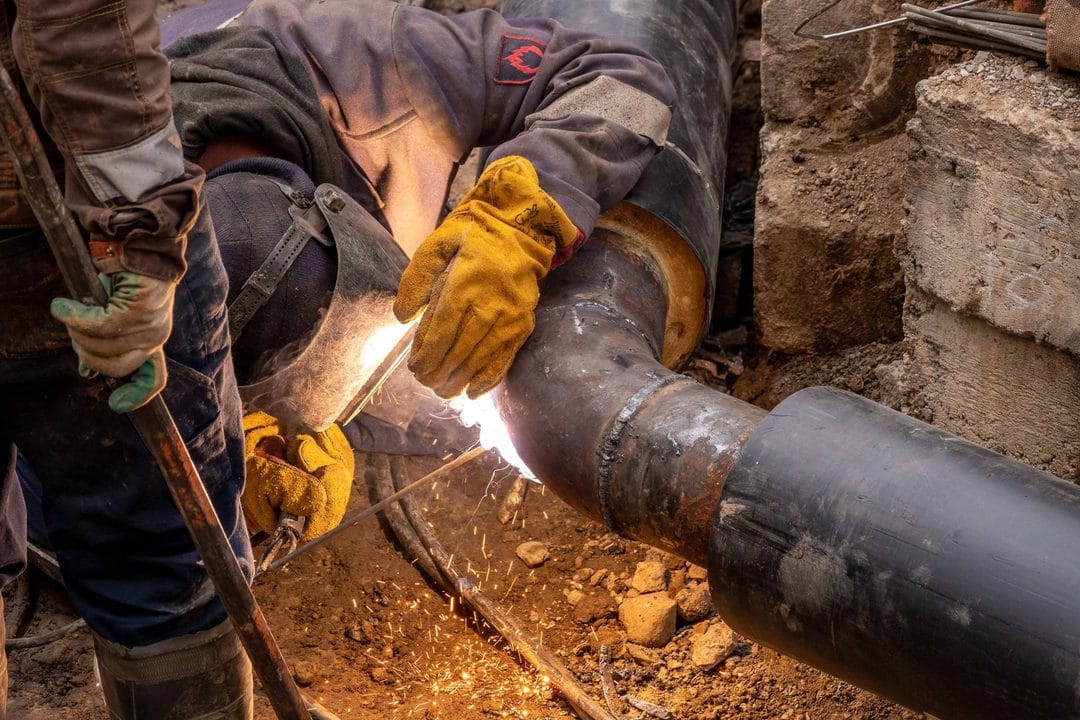
Nobody thinks about the drains until one of them stops working. A slow sink in the kitchen becomes a sour smell in the back garden, and then a damp patch on the utility room wall. By the time you have a plumber's van outside, the question that matters is not how to fix the blockage but who is supposed to pay for the digging. The answer depends on where the pipe is, and that line is less obvious than most owners assume.
Private drain or public sewer: the boundary decides
In England and Wales, the pipes that carry waste from a house are split into two categories. The private drain runs from the building to the boundary of your property, and it belongs to you. The public sewer is owned and maintained by the water company, and it is the network that takes everything away to treatment works.
The complication is the lateral drain, the stretch between your boundary and the main sewer. Since 1 October 2011, under the Water Industry Act 2011, most private sewers and lateral drains that served more than one property, or that connected into the public network, were transferred to the water and sewerage companies. That transfer was a big deal for owners who had been paying for repairs on pipes they never used alone. It did not cover every pipe, though. A drain that serves only your home and runs entirely within your land generally remains your responsibility.
In practice, the easiest way to settle a dispute is to ask the water company to confirm in writing who owns the section where the fault is. Give them the address and a sketch of where the blockage or collapse is, and ask them to check their adoption records. Do this before you book a contractor, because a repair you pay for on a pipe the company owns is money you will struggle to get back.
How you find out there is a fault
Most drain problems announce themselves. Water backs up in the shower tray when the washing machine drains, toilets gurgle, or the inspection chamber in the garden fills after rain. Less obvious signs include a patch of unusually green grass over a run of pipe, cracks in a patio that follow a straight line, or a persistent smell near a manhole cover.
If you suspect a fault but cannot see it, a CCTV drain survey is the standard way to find out what is happening inside the pipe. A camera is fed down through an inspection chamber, and the operator records cracks, displaced joints, root intrusion and grease build-up. The report usually shows the exact position of the fault in metres from the chamber. A survey is often a few hundred pounds, and it is money well spent before you agree to dig up a garden.
- Ask for the report in writing, with the footage or stills showing the defect.
- Check whether the survey covers the whole run, or only the part you asked about.
- Confirm which chamber it started from, so the contractor is working on the same pipe.
Be careful with chemical drain cleaners. Repeated use of caustic products can soften an old clay or cast-iron pipe, and a camera survey will show the damage clearly. If the blockage is near the surface, a plunger or a drain rod is the sensible first step. If the water still will not clear after that, stop pouring things down the drain and make the call, because each attempt can move the blockage deeper into the pipe.
Landlords have a separate duty
If you let a property, the rules are different. Section 11 of the Landlord and Tenant Act 1985 places a duty on the landlord to keep in repair the structure and exterior of the dwelling, including drains, gutters and external pipes. That duty applies to tenancies granted for less than seven years, and it is a repairing obligation that cannot be signed away in the tenancy agreement.
The practical consequence is that a blocked drain reported by a tenant is your problem to solve, even if the cause turns out to be something the tenant did, such as flushing wet wipes. You may be able to recover the cost from the tenant in some cases, but you need evidence. Keep the survey report, the engineer's invoice and a dated record of the tenant's report. Without them, you are arguing from memory.
Insurance: what it covers and what it does not
Buildings insurance usually covers sudden damage caused by a leak or blockage, such as water escaping and damaging ceilings or floors. It rarely pays for the drain itself, because the cost of repairing a worn or cracked pipe is treated as wear and tear. Read the policy for the phrase "accidental damage" and see whether the drains are listed as part of the building or excluded.
Some policies include drain cover as an optional extra, and these are worth pricing. The annual premium for a standalone cover is typically modest compared with a single excavation, but the policy will have limits, excesses and conditions that you need to understand. Make sure you know the excess before you call the insurer, because an excess of several hundred pounds can make a small repair pointless to claim.
Repairing the pipe: the options
When the drain is yours and the fault is confirmed, there are two main approaches. The traditional method is excavation: the trench is dug, the damaged section is cut out, and new pipe is laid with the right fall. It is reliable and fast for a short run, but it means a dug-up driveway or lawn and a bill that rises with every metre of digging.
The alternative is trenchless relining, where a resin-impregnated liner is pulled into the existing pipe and cured in place. It needs much smaller access holes and avoids digging up the garden, which makes it popular for drains running under patios, driveways and conservatories. It is not suitable for every defect. A pipe that has collapsed or is badly offset usually needs excavation, and a good surveyor will say so. Ask for both options in writing if the contractor has not offered them.
Whichever route you take, ask for the work to be covered by a guarantee, and keep the completion report with the CCTV footage showing the finished pipe. That document is worth more to a future buyer than any number of photographs.
Buying a house with drainage history
If you are buying, drainage is one of the questions that matters most in the early stages. The local authority search can tell you about public sewers near the property, but the CON29DW drainage and water search goes further. It shows whether the property is connected to the public sewer, whether there are records of public sewers within the boundary, and whether the water company has any adoption notices affecting the site.
Ask the seller directly about past blockages, repairs and any relining. Get the answers in writing, and compare them with what a surveyor finds on the day. If the survey flags a possible issue, you have three choices: ask the seller to fix it before exchange, agree a price reduction that covers a realistic repair estimate, or walk away. A sensible repair estimate is worth more than optimism.
A short checklist before you sign anything
Before you commit money to a drain repair or a purchase, confirm the boundary of ownership, get the fault recorded on camera, check your insurance excess and ask for both repair options in writing. These four steps cost little time, and they turn a frightening weekend into a manageable project with a clear budget.