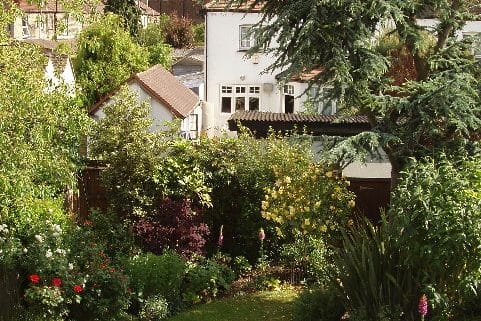
Two semi-detached houses on the same road in Wandsworth went to market within a fortnight of each other last month. Same builder, same 1930s footprint, same three bedrooms. One had a 40-square-metre garden with a patio and a lawn that had clearly been tended for years. The other had a yard the size of a parking bay, mostly given over to bins. The garden house sold for £68,000 more, and it sold first. Neither figure was a fluke — agents in that part of south-west London will tell you, off the record, that outdoor space is doing more work in a sale than a new kitchen ever could this year.
That gap is not universal, and it is not fixed. In a Zone 2 postcode with no on-street parking and a shortage of family homes, a garden can be worth a genuinely large premium because so few alternatives exist. In a market town in Lincolnshire, where most houses already come with a strip of lawn as standard, the same garden barely moves the needle — it is the baseline, not the bonus. What has changed since the pandemic reshuffled everyone's priorities is that buyers now ask about outdoor space earlier in a viewing, sometimes before they ask about the boiler.
What Estate Agents Actually See When They Value a Garden
Valuers do not price a garden as a flat percentage on top of the house. They price it against what else is on the market in that specific street, because a garden's value is entirely relative to scarcity. Rightmove's search filters now let buyers screen out anything without outdoor space entirely, which means a garden-less flat in a competitive postcode is quietly losing a slice of its audience before anyone has even booked a viewing. Agents who work the £400,000–£700,000 bracket in commuter towns around Reading, Guildford and St Albans report that a usable, private garden — south- or west-facing, ideally — routinely adds somewhere between 5 and 20 per cent to what a comparable property without one would fetch. Flats with a shared or communal garden sit in between: better than nothing, worse than sole use.
Size matters less than you would think. A well-kept 30-square-metre garden in good proportion to the house will often out-price a scrubby 80-square-metre plot that looks like a project. What buyers are actually valuing is usability — can they put a table out there in June, can a child kick a ball around, can a dog turn around without knocking over a plant pot. A garden that photographs as "somewhere you'd actually sit" beats a garden that photographs as "somewhere you'd have to work on" almost every time, regardless of square footage.
Regional Variation: The Premium Depends on the Postcode
London and the commuter belt push garden premiums higher than almost anywhere else in the country, simply because flat living is the norm and any private outdoor space is scarce by definition. Move north and the picture changes. In Manchester and Leeds, where terraced housing with a small yard or courtyard is standard stock, a genuinely landscaped garden still adds value, but the gap between "has one" and "doesn't" is narrower because so few properties in those cities were built with large gardens in the first place. Bristol sits somewhere in between — a city with a strong family-buyer market and a taste for period houses, where a good-sized garden in Bishopston or Southville can add tens of thousands to a sale, closer to London multiples than northern ones. In Scotland, particularly Edinburgh's New Town and similar tenement-heavy areas, a private garden is rare enough that it behaves almost like a separate asset class, sometimes marketed and valued nearly independently of the flat itself. The lesson for anyone weighing up whether to spend on landscaping is to look at what's actually scarce in their own street, not at a national average that flattens all of this out.
The Improvements Worth Paying For — and the Ones That Aren't
Not every pound spent outdoors comes back at sale. Some of it comes back at a multiple; some of it disappears entirely. The distinction that matters is between improvements that make a garden immediately usable and improvements that only the current owner will ever appreciate.
- A resurfaced patio or a simple deck — expect £45–£75 per square metre for stone paving, £70–£120 for timber decking fitted — tends to recoup most or all of its cost because it photographs well and removes an obvious "to-do" for the buyer.
- Fresh turf or a properly reseeded lawn, at roughly £25–£40 per square metre including preparation, is cheap relative to the difference between a tidy lawn and a patchy one in listing photos.
- A garden room or outbuilding, by contrast, is a £15,000–£35,000 gamble. It can be a genuine selling point if it's built to last and reads as flexible space — a home office, a gym — but plenty of buyers see a shed with delusions of grandeur and mentally knock the cost of removal off their offer.
- Ornamental water features, elaborate topiary, and anything requiring specialist ongoing maintenance generally do the opposite of what the owner intended; a pond reads as a liability to a family with small children, and few buyers want to inherit someone else's hobby.
Landscaping firms will quote for a full garden redesign anywhere from £5,000 for a modest tidy-up to £20,000 and beyond for structural work involving retaining walls or drainage. Spend on the bones — boundaries, drainage, a level and usable lawn or patio — before spending on the decoration. A new fence from Jacksons or a decent gate does more for kerb appeal and buyer confidence than a rose arch ever will, because it signals the garden is secure and private, which is what most buyers are actually worried about when they can't see over the wall.
Summer Viewings: Why a July Garden Makes or Breaks a Sale
Timing a sale around the garden is not vanity — it's arithmetic. A garden shown in July, with everything in leaf and the light staying until nine in the evening, sells a lifestyle that a February viewing simply cannot. Estate agents will privately admit that some vendors lose thousands by listing in autumn when the same house, shown in June with the patio doors open, would have generated a bidding war. If you're planning to sell this year and your garden is any kind of asset, list between May and August. Don't wait for fully bloomed roses — a mown lawn, swept patio and a couple of pots by the back door on viewing day will outperform an overgrown garden with expensive plants nobody can see properly through the weeds.
Before a viewing, clear anything that reads as "storage" — bikes leant against the fence, a rotary washing line mid-garden, a trampoline eating half the lawn. None of that is a dealbreaker on its own. Stacked together, though, it tells a buyer the garden is a dumping ground rather than a room, and that impression is hard to undo once it forms.
The Permitted Development Trap
Here's where a lot of sellers trip themselves up.
Garden rooms and outbuildings under 2.5 metres in height, positioned more than two metres from a boundary, generally fall under permitted development rights and don't need planning permission from the local council. Build one taller, or closer to the boundary, or cover more than half the garden with outbuildings, and you've potentially built something that needs retrospective consent — which can turn into a genuine headache during conveyancing, because a buyer's solicitor will ask for proof it was lawfully built.
Every council interprets the detail slightly differently, and conservation areas and listed buildings carry tighter restrictions again. Check with your local planning department before you commission anything larger than a garden shed, and keep the paperwork. A garden room with no evidence of lawful construction isn't a selling point at survey stage — it's a delay, and sometimes a price chip, right when you can least afford one.
What This Means If You're Buying or Selling This Summer
If you're selling, spend on usability, not novelty — a good patio and a healthy lawn beat a water feature every time, and June through August is genuinely the best window to list a garden-led property. If you're buying, don't assume every advertised "garden" is worth the premium being asked for it; a north-facing yard that never sees direct sun for more than two hours a day is a very different asset from a south-facing plot the same size, and no listing photo taken at midday in July will tell you which one you're looking at. Ask when the photos were taken. Visit at a different time of day if the sale is close enough to matter, because a garden that looks glorious at 2pm in the estate agent's photograph can be a cold, shaded strip by 5pm — and that's the two hours most families are actually going to use it.
The Wandsworth sale that opened this piece wasn't an outlier so much as an early signal. As more buyers filter listings by outdoor space before they ever click through to the details, gardens are moving from "nice to have" to a genuine line item on the valuation. Sellers who treat theirs as an afterthought are the ones leaving money on the table, and it doesn't take a landscape architect to fix that — a tidy lawn, a swept patio and a fence that doesn't lean is usually enough to close the gap. Buyers, meanwhile, would do well to remember that a garden is also a running cost: turf needs cutting, fences need painting, and a paved courtyard that looked low-maintenance in the listing photos still needs weeding by August. Factor that into the offer, not just the asking price.