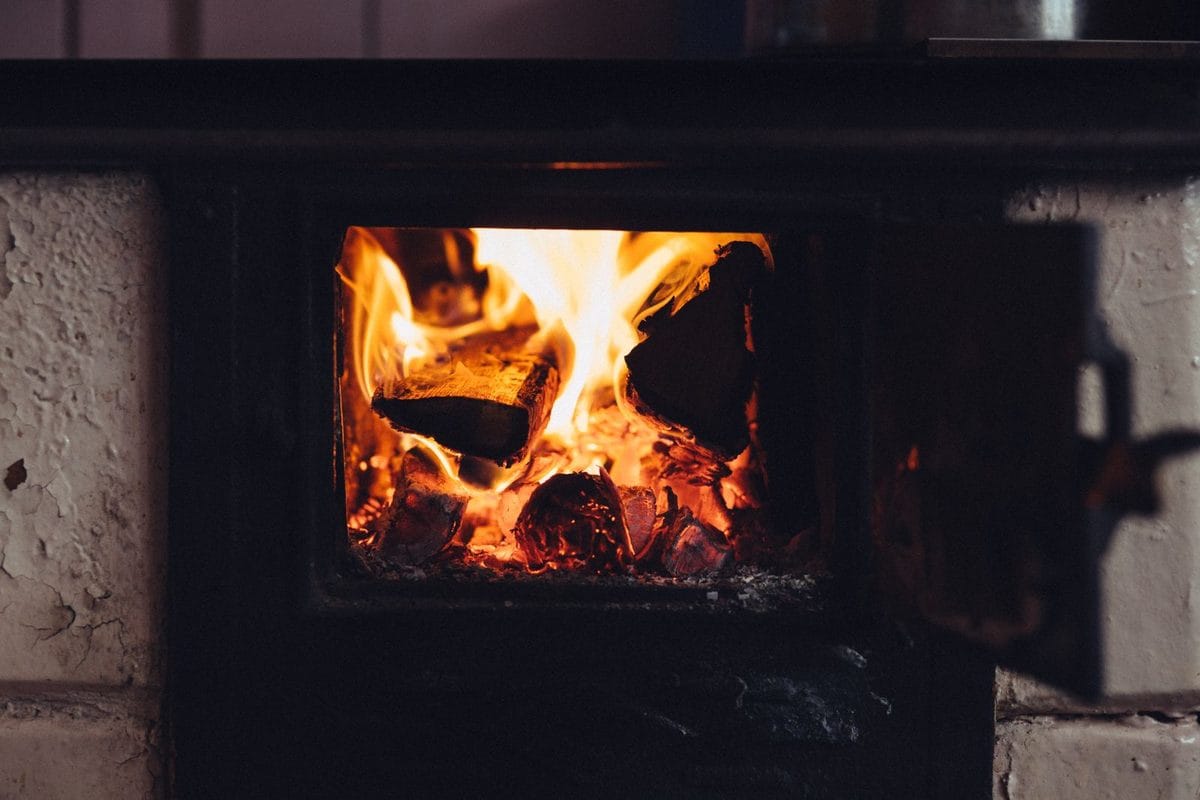
The first properly cold morning of the autumn is when most households switch the boiler back on for the season. It is also the morning a carbon monoxide alarm either earns its place on the wall or turns out to have been forgotten since the last tenancy began. Carbon monoxide is colourless, odourless and tasteless, so nothing in the room warns you that it is there. For landlords in England the rules on alarms are specific and enforceable, and for homeowners the risk is the same even though the law leaves the decision to them. This guide sets out what the regulations require, which rooms they cover, what the penalties look like, and what anyone with a boiler or a log burner should check before the heating goes on.
What the law requires a landlord to fit
The Smoke and Carbon Monoxide Alarm (England) Regulations 2015 were amended in 2022, and the amendment came into force on 1 October 2022. Under the current rules, every relevant landlord must do three things. The first is to make sure at least one smoke alarm is equipped on each storey where there is a room used as living accommodation. The second is to make sure a carbon monoxide alarm is equipped in any room used as living accommodation that contains a fixed combustion appliance, with gas cookers excluded. The third is to repair or replace any smoke or carbon monoxide alarm once the landlord has been told it is faulty and has confirmed the fault. The regulations apply to most private rented homes in England, and to social landlords' tenancies too, although some arrangements are excluded, including shared accommodation with a landlord or the landlord's family, student halls and care homes. Anyone unsure whether their let falls inside the scope should read the official Q&A booklet on GOV.UK rather than rely on a forum answer. The rules are enforced by the local housing authority, the council responsible for housing in that area.
Which rooms count, and why the hall matters
A fixed combustion appliance is any fixed apparatus that burns fuel to produce heat. In practice that means a gas boiler, an oil boiler, a coal or wood-burning stove, or a gas or oil fire. The government's view is that a purely decorative fireplace that does not work does not count, which is a relief for period properties with a blocked-up chimney and a fireplace that has been decorated for thirty years. A gas hob or gas oven is excluded from the rule, which surprises some people who assume any gas appliance triggers it.
The boiler is the item most landlords overlook, because it often sits in a cupboard in the kitchen, a utility room or the hall. The regulations treat a hall or landing as a room in its own right, so a boiler in a hall cupboard is not automatically excluded: the question is whether that hall is used as living accommodation, and the landlord should answer it rather than assume. Where the alarm is needed, the guidance suggests positioning it at head height, roughly one to three metres from the appliance, which means in the room rather than inside the cupboard.
Bathrooms and lavatories are also treated as living accommodation, so a gas water heater in a bathroom brings that room into scope too. Many landlords only check the main living room, and that is the gap an inspector is likely to find first.
Smoke alarms: the older rule, with a few traps
The smoke alarm requirement is older. It has applied to private rented homes since the 2015 regulations came into force, and it asks for one alarm on every storey that contains living accommodation. The usual advice is to fix the alarm to the ceiling in a circulation space, meaning a hall or a landing, because that is where smoke from a kitchen or a bedroom is most likely to reach first. The regulations do not specify the type, but the guidance recommends alarms that meet BS 5839-6, and says that where batteries are used, sealed-for-life units are the better choice than models with replaceable batteries.
The trap is the word storey. A mezzanine is not a storey, according to the department's reading, so a flat with a mezzanine bedroom may need only the alarm on the main floor, and the landlord should not add one on the mezzanine simply because it feels safer. That is a sensible point of law, not an excuse to skip the step. The same guidance is clear that heat detectors are not a replacement for smoke alarms.
The start-of-tenancy check that gets forgotten
For a new tenancy beginning on or after 1 October 2022, the landlord must check that each prescribed alarm is in proper working order on the day the tenancy begins. A renewal of an existing tenancy does not count as new for this purpose, but a new agreement with a new tenant does. The official guidance is careful about proof: the landlord has to keep a record of when the test was done, and the local authority decides whether the evidence is enough. One practical approach is to walk through the inventory on the first day, test each alarm in front of the tenant, and have the tenant sign the inventory to confirm the alarms were working. That signature is cheap and it answers the question a council officer will ask in six months' time. A landlord who keeps that paper trail can answer the question in a minute, whereas one who relies on memory usually cannot.
Tenants have a role too. If an alarm stops working during the tenancy, the guidance advises the tenant to try fresh batteries first, and to report the fault to the landlord if the alarm still does not work. Landlords are then responsible for repairing or replacing it. A landlord who is refused access to fit or repair an alarm is not expected to go to court to gain entry, but must show the council that they took reasonable steps, such as writing to the tenant with the reason for the visit, offering a time that suits, and keeping a note of each attempt.
The penalty, and why the paperwork is the real protection
The enforcement route runs through a remedial notice. If a council finds a breach, it can serve a notice requiring the landlord to act, and failing to comply with that notice can lead to a fine of up to £5,000. The government's guidance says penalties are applied per breach, not per landlord or per property, which means a building with several flats and several missing alarms can add up quickly. The landlord has a right of appeal to the First-tier Tribunal against the penalty charge notice.
That number is worth knowing, but it is the wrong thing to focus on. A landlord who has a dated record of the alarm test, a signed inventory and a fitting invoice will rarely reach the point of a remedial notice. A landlord who has none of those is likely to spend far more time arguing with the council than the alarm would have taken to fit.
The gas check that happens in the same month
Landlords also have a separate annual duty for gas. GOV.UK states that a landlord must do an annual gas safety check on each gas appliance and flue, and must give the tenant a copy of the gas safety check record either before they move in or within 28 days of the check being completed. The check must be carried out by an engineer registered with the Gas Safe Register. Shelter's advice describes the same cycle as every 12 months.
The gas check covers appliances and flues, so it does not replace the alarm test the regulations require. Still, the two fit together naturally, and a landlord who books both on the same day has one fewer thing to forget.
If you own your home
The alarm regulations do not apply to owner-occupiers. That means there is no legal duty for a homeowner to fit a carbon monoxide alarm under these rules, and no council will serve a notice on a homeowner for lacking one. It does not mean the sensible choice is to skip it. The symptoms of carbon monoxide poisoning are easy to mistake for ordinary winter illness, and that is precisely what makes an alarm useful. The NHS lists headache, dizziness, feeling sick or being sick, weakness, tiredness, confusion, and chest and muscle pain among the signs.
If you suspect poisoning, the NHS advice is to contact NHS 111, and in an emergency or if someone is seriously unwell, call 999. An alarm is a detector, not a fix. It will not tell you why the boiler is producing carbon monoxide, and a Gas Safe registered engineer who services the boiler and checks the flue is the step that addresses the cause.
Homeowners should also note that a working log burner is a fixed combustion appliance under the landlord rules, so the same logic applies at home: the alarm belongs in the room with the stove.
What to do before the heating goes on
- Find every fixed combustion appliance in the property, including the boiler cupboard, the utility room and any log burner, and note which room each one sits in.
- Check that a carbon monoxide alarm is present in each of those rooms, placed where the manufacturer's instructions say, and that it is not hidden behind a door or a cupboard.
- Test every smoke alarm and confirm there is one on each storey with living accommodation, with sealed-for-life batteries where the unit allows it.
- For a let, write down the test date and ask the tenant to sign the inventory. For a home you live in, add the test to the calendar you already use for the boiler service.
- Book the annual gas check, or the boiler service, with a Gas Safe registered engineer before the first cold week rather than after it.
The heating season is short enough that a single afternoon covers the list above. What it asks of a landlord is a record, and what it asks of a homeowner is a battery and a diary entry. Neither task takes long, and both are far easier to do in October than to explain in February.