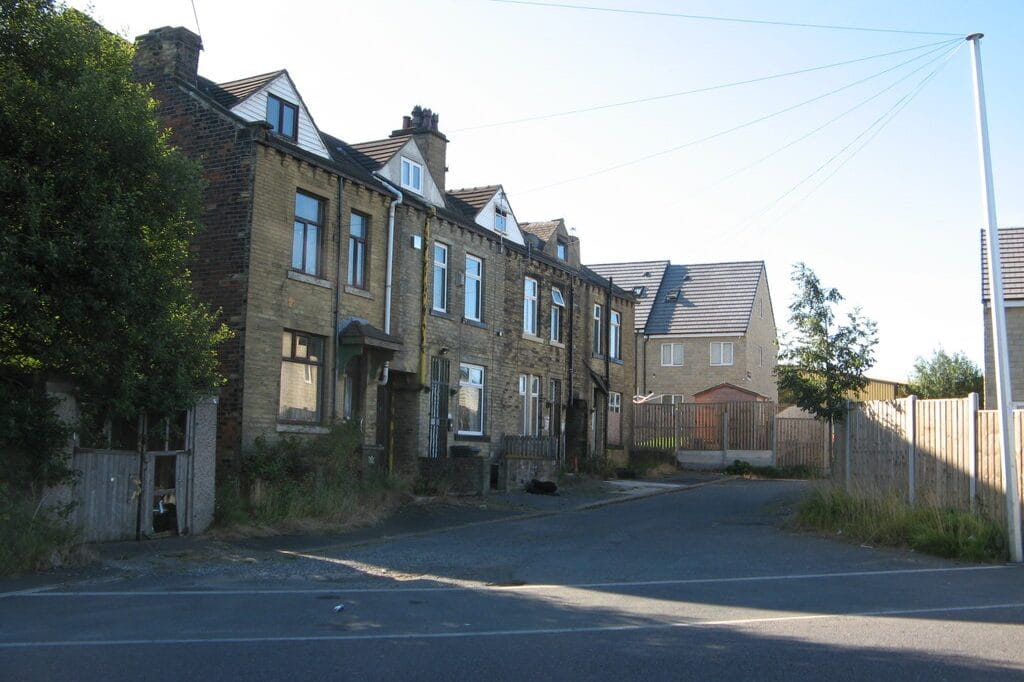
Walk down Hyde Park Road in Leeds or Ecclesall Road in Sheffield this week and you will see the same scene repeated outside every third house: a landlord's agent with a clipboard, three students in university hoodies, and a queue of five more waiting their turn to view a room that will not exist on the market by Friday. September has always been the busiest month in the student lettings calendar, but this year the scramble has moved earlier, started harder, and left more tenants without anywhere signed by the time freshers' week begins.
Why the Squeeze Has Moved Earlier
Traditionally, the bulk of student house-hunting happened in the spring term, with second and third years locking down a shared house for the following academic year as early as January. That pattern has cracked. Agents in Nottingham and Manchester report that viewings for September 2026 tenancies were still running in July, not because demand was soft but because supply kept shrinking underneath it — landlords selling up, licensing costs rising, and purpose-built blocks filling their own waiting lists before the traditional shared-house market even opened. Unipol, the student housing charity that runs accreditation schemes in several university cities, has flagged the same pressure in its own city-level reports for years, and 2026 has not broken the trend. A room in a decent shared house near a redbrick campus now typically runs £130 to £180 a week outside London, up from figures closer to £110 to £150 three or four years ago, and international students arriving without a UK-based guarantor are increasingly being asked to pay six or even twelve months upfront just to secure the room at all. SpareRoom's own listing data has repeatedly shown vacancy windows in university postcodes shrinking to days rather than weeks each August, and several letting agents in Leeds and Sheffield now openly advise groups to view and sign on the same day if they want a specific house at all. None of that is exclusive to this year, but the compression has never been this tight this early in the calendar.
The result is a market where a well-located four-bed HMO near a campus in a city like Leeds or Loughborough can go from listing to fully let within 48 hours, often to a group who never physically viewed the property and instead signed off a video call. That is not a sign of a healthy market — it is a sign of a market so thin that buyers no longer have the luxury of due diligence. If you are a parent guarantor reading this while your child sends you a tenancy agreement to sign at 11pm, take the extra day anyway. A rushed signature on a joint-and-several tenancy is the single most consequential document most 18-year-olds will ever put their name to, and the extra 24 hours rarely costs you the room.
The Purpose-Built Alternative — And Its Own Limits
Purpose-built student accommodation, run by operators such as Unite Students, Student Roost and iQ, was supposed to be the pressure valve. In cities where it has been built at scale — Leeds, Sheffield, Coventry — it has absorbed a meaningful share of first-year demand and taken some heat off the terraced-house market nearby. But PBSA rents have climbed faster than shared-house rents over the past few years, and a studio in a new-build block can now cost more per week than an equivalent room in a traditional HMO with better transport links. Students who can afford the premium get certainty; students who can't are pushed back into a shared-house market that has fewer options than it did five years ago, because some of that older stock has been sold off entirely rather than relet.
What's Actually Changed on the Regulatory Side
None of it happened by accident.
Three things are reshaping how landlords approach student lets this year, and all three matter more than the headline rent figures. First, mandatory HMO licensing in England — required wherever five or more tenants from two or more households share kitchen or bathroom facilities — now carries licence fees that vary sharply by council, typically somewhere between £600 and £1,500 for a five-year term, on top of the fire safety, room-size and amenity standards a property must meet to pass inspection. Second, several university wards have adopted Article 4 Directions, the planning tool that strips away the automatic right to convert an ordinary family house into a shared HMO — Nottingham applied one across Lenton and Dunkirk years ago, and Leeds has used the same mechanism around Headingley and Hyde Park, which means the supply of newly convertible student housing in the most in-demand postcodes is now capped by planning policy, not just by market appetite. Third, and more consequential than either, the Renters' Rights Act reshaped the legal footing of the entire sector by scrapping Section 21 no-fault evictions and moving tenancies onto a rolling periodic footing — with a specific carve-out, Ground 4A, that lets landlords letting to full-time students in qualifying shared housing regain possession ahead of the next academic year. Single self-contained student flats don't get the same automatic ground, which is already pushing some landlords to convert flats into licensed shared houses purely to keep the yearly turnover cycle they rely on. Insurers have started asking pointed questions about licensing status at renewal too, and a lapsed HMO licence can now be enough for some providers to void cover on a claim entirely, which is a far costlier mistake than the licence fee itself.
That carve-out exists precisely because student lets don't behave like ordinary residential tenancies — nobody wants a landlord stuck unable to relet a house in a university city because one tenant from three years ago never left — but it has also handed landlords a reason to favour HMO conversions over self-contained lets, which narrows the type of student housing actually coming onto the market. Landlords weighing up whether to relicense an ageing HMO or sell into the current sellers' market should run the licence-renewal cost against five years of guaranteed-let income before deciding — in most university cities right now, the numbers still favour holding.
What This Means If You're Renting Right Now
For tenants, the practical advice is blunt: don't wait for the "ideal" house. Sign the reasonable one the day you view it, because a second viewing slot rarely materialises in this market. Check the EPC rating before you sign anything — a property rated F or G is legally lettable today under the current minimum standard of E, but proposed tightening to a minimum C rating for private rentals would put a chunk of older student housing stock at risk of falling out of the legal market altogether, and a landlord facing that bill has every incentive to pass some of it on to you at renewal. Ask to see the HMO licence itself, not just a verbal assurance that "it's all sorted" — a property let above its licensed occupancy limit is not just a housing standards problem, it can affect your own legal protections if something goes wrong with the property mid-tenancy.
- Confirm the HMO licence number and check it against the council's public register before paying a holding deposit.
- Ask what the deposit is protected under — TDS, DPS or mydeposits — and get the protection certificate in writing, not a promise.
- Read the guarantor clause line by line; some agreements make a parent liable for the full house's rent, not just their own child's share, and that detail is easy to miss at midnight before a deadline.
The Bigger Picture for Landlords
None of this means student lets have stopped being a sound investment — yields in university cities regularly outperform standard buy-to-let, and demand is, if anything, more reliably renewed each September than in almost any other rental segment. But the margin for sloppy compliance has narrowed. Councils in Manchester, Leeds and Nottingham have all stepped up enforcement against unlicensed HMOs in the past two years, with fines that can run into five figures for a first offence and a rent-repayment order on top that hands tenants back up to twelve months of rent paid. A landlord who has been coasting on an expired or never-obtained licence is no longer operating in a grey area — they are operating in a market where a single tenant complaint can trigger an inspection within weeks.
The smarter operators in this space have already adapted: they relicense early rather than reactively, they budget for the EPC upgrade before it becomes mandatory rather than after, and they treat the September changeover as a fixed cost of doing business rather than an annual scramble. Everyone else is discovering, house by house, that the students filling their rooms this month are savvier about their rights than the cohort that signed five years ago — and that a market this tight doesn't forgive landlords who assume tenants won't check.